Wednesday, May 28, 2008

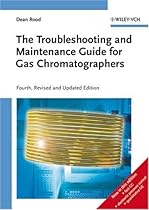
The Troubleshooting and Maintenance Guide for Gas Chromatographers

The Troubleshooting and Maintenance Guide for Gas Chromatographers

The Troubleshooting and Maintenance Guide for Gas Chromatographers

By Dean Rood

This fourth edition of the classic guide for every user of gas chromatographic instrumentation is now updated to include such new topics as fast GC using narrow, short columns, electronic pressure control, and basic aspects of quantitative gas chromatography.

The author shares his many years of experience in technical support for gas chromatography users, addressing the most common problems, questions and misconceptions in capillary gas chromatography. He structures and presents the material in a concise and practical manner, suitable even for the most inexperienced user without any detailed knowledge of chemistry or chromatography.

For lab technicians in chemistry, analytical, food, medicinal and environmental chemists, pharmaceutists.


Find more at Chemistry Textbook aStore.

Tuesday, May 27, 2008

Gas Chromatography and Mass Spectrometry

Gas Chromatography and Mass Spectrometry

Gas Chromatography and Mass Spectrometry

By Fulton G. Kitson, Barbara S. Larsen, Charles N. McEwen

This guide provides, under one cover, a wealth of practical information designed to facilitate the effectiveness of the GC/MS user. Separation conditions for numerous compound types are provided along with derivatized and underivatized compounds. A section on how to interpret mass spectral data, an extensive correlation of ion masses and neutral losses with possible structures, and examples of mass spectra are provided to further aid structure determination. Also included are basic information on instrumentation, ionization methods, quantitation, tips on the operation of mass spectrometers, the best derivatization procedures for a variety of compound types, troubleshooting techniques, and a variety of other information found to be useful to the practicing user of GC/MS instrumentation. This guide would be immediately valuable to the novice as well as the experienced GC/MS user who may not have the breadth of experience covered in this book.

Key Features

* Condenses and organizes recent and essential information for new and experienced GC/MS users

* Comprehensively indexed and referenced

* Includes practical methods of analysis

* Serves as a text reference for short practical courses on the subject

Find more at Chemistry Textbook aStore.

Static Headspace-Gas Chromatography: Theory and Practice

Static Headspace-Gas Chromatography: Theory and Practice

Static Headspace-Gas Chromatography: Theory and Practice

By Bruno Kolb, Leslie S. Ettre

The only reference to provide both current and thorough coverage of this important analytical technique

Static headspace-gas chromatography (HS-GC) is an indispensable technique for analyzing volatile organic compounds, enabling the analyst to assay a variety of sample matrices while avoiding the costly and time-consuming preparation involved with traditional GC.

Static Headspace-Gas Chromatography: Theory and Practice has long been the only reference to provide in-depth coverage of this method of analysis. The Second Edition has been thoroughly updated to reflect the most recent developments and practices, and also includes coverage of solid-phase microextraction (SPME) and the purge-and-trap technique. Chapters cover:

* Principles of static and dynamic headspace analysis, including the evolution of HS-GC methods and regulatory methods using static HS-GC

* Basic theory of headspace analysis-physicochemical relationships, sensitivity, and the principles of multiple headspace extraction

* HS-GC techniques-vials, cleaning, caps, sample volume, enrichment, and cryogenic techniques

* Sample handling

* Cryogenic HS-GC

* Method development in HS-GC

* Nonequilibrium static headspace analysis

* Determination of physicochemical functions such as vapor pressures, activity coefficients, and more

Comprehensive and focused, Static Headspace-Gas Chromatography, Second Edition provides an excellent resource to help the reader achieve optimal chromatographic results. Practical examples with original data help readers to master determinations in a wide variety of areas, such as forensic, environmental, pharmaceutical, and industrial applications.

More Gas Chromatography (GC) Book Here!
Modern Practice of Gas Chromatography

Modern Practice of Gas Chromatography

Modern Practice of Gas Chromatography

From Wiley-Interscience

The bible of gas chromatography-offering everything the professional and the novice need to know about running, maintaining, and interpreting the results from GC

Analytical chemists, technicians, and scientists in allied disciplines have come to regard Modern Practice of Gas Chomatography as the standard reference in gas chromatography. In addition to serving as an invaluable reference for the experienced practitioner, this bestselling work provides the beginner with a solid understanding of gas chromatographic theory and basic techniques.

This new Fourth Edition incorporates the most recent developments in the field, including entirely new chapters on gas chromatography/mass spectrometry (GC/MS); optimization of separations and computer assistance; high speed or fast gas chromatography; mobile phase requirements: gas system requirements and sample preparation techniques; qualitative and quantitative analysis by GC; updated information on detectors; validation and QA/QC of chromatographic methods; and useful hints for good gas chromatography.

As in previous editions, contributing authors have been chosen for their expertise and active participation in their respective areas. Modern Practice of Gas Chromatography, Fourth Edition presents a well-rounded and comprehensive overview of the current state of this important technology, providing a practical reference that will greatly appeal to both experienced chomatographers and novices.

See Gas Chromatography (GC) Book at Chemistry Textbook aStore.

Friday, May 23, 2008

Modern Spectroscopy

Modern Spectroscopy

Modern Spectroscopy

By J. Michael Hollas

The latest edition of this highly acclaimed title introduces the reader to a wide range of spectroscopies, and includes both the background theory and applications to structure determination and chemical analysis. It covers rotational, vibrational, electronic, photoelectron and Auger spectroscopy, as well as EXAFs and the theory of lasers and laser spectroscopy.

  • A revised and updated edition of a successful, clearly written book

  • Includes the latest developments in modern laser techniques, such as cavity ring-down spectroscopy and femtosecond lasers

  • Provides numerous worked examples, calculations and questions at the end of chapters


See more at Spectroscopy Book aStore.

Wednesday, May 21, 2008

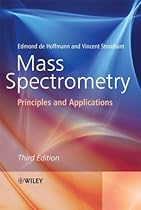
Mass Spectrometry: Principles and Applications

Mass Spectrometry: Principles and Applications

Mass Spectrometry: Principles and Applications

By Edmond de Hoffmann, Vincent Stroobant

The latest edition of a highly successful textbook, Mass Spectrometry, Third Edition provides students with a complete overview of the principles, theories and key applications of modern mass spectrometry. All instrumental aspects of mass spectrometry are clearly and concisely described: sources, analysers and detectors. Tandem mass spectrometry is introduced early on and then developed in more detail in a later chapter. Emphasis is placed throughout the text on optimal utilisation conditions. Various fragmentation patterns are described together with analytical information that derives from the mass spectra.

This new edition has been thoroughly revised and updated and has been redesigned to give the book a more contemporary look. As with previous editions it contains numerous examples, references and a series of exercises of increasing difficulty to encourage student understanding. Updates include: Increased coverage of MALDI and ESI, more detailed description of time of flight spectrometers, new material on isotope ratio mass spectrometry, and an expanded range of applications.

Mass Spectrometry, Third Edition is an invaluable resource for all undergraduate and postgraduate students using this technique in departments of chemistry, biochemistry, medicine, pharmacology, agriculture, material science and food science. It is also of interest for researchers looking for an overview of the latest techniques and developments.

Find more Mass Spectrometry at Spectroscopy Book aStore.

Protein NMR Spectroscopy: Principles and Practice

Protein NMR Spectroscopy: Principles and Practice

Protein NMR Spectroscopy: Principles and Practice

By John Cavanagh, Wayne J. Fairbrother, III, Arthur G. Palmer, Nicholas J. Skelton, Mark Rance

Protein NMR Spectroscopy combines a comprehensive theoretical treatment of NMR spectroscopy with an extensive exposition of the experimental techniques applicable to proteins and other biological macromolecules in solution. Beginning with simple theoretical models and experimental techniques, Protein NMR Spectroscopy develops the complete repertoire of theoretical principles and experimental techniques necessary for understanding and implementing the most sophisticated NMR experiments.

Important new techniques and applications of NMR spectroscopy have emerged since the first edition of this extremely successful book was published in 1996. The second edition includes new sections describing measurement and use of residual dipolar coupling constants for structure determination, TROSY and deuterium labeling for application to large macromolecules, and experimental techniques for characterizing conformational dynamics. In addition, the treatments of instrumentation and signal acquisition, field gradients, multidimensional spectroscopy, and structure calculation are updated and enhanced.

Protein NMR Spectroscopy is written as a graduate-level textbook and will be of interest to biochemists, chemists, biophysicists, and structural biologists who utilize NMR spectroscopy or who wish to understand the latest developments in this field.

· Provides an understanding of the theoretical principles important for biological NMR spectroscopy

· Demonstrates how to implement, optimize and troubleshoot modern multi-dimensional NMR experiments

· Allows for the capability of designing effective experimental protocols for investigations of protein structures and dynamics

· Includes a comprehensive set of example NMR spectra of ubiquitin provides a reference for validation of experimental methods

Find more at Spectroscopy Book aStore.