Showing posts with label Mass Spectrometry. Show all posts

Wednesday, June 18, 2008

Trace Quantitative Analysis by Mass Spectrometry

Trace Quantitative Analysis by Mass Spectrometry

Trace Quantitative Analysis by Mass Spectrometry

By Robert K. Boyd, Robert A. Bethem, Cecilia Basic

This book provides a serious introduction to the subject of mass spectrometry, providing the reader with the tools and information to be well prepared to perform such demanding work in a real-life laboratory. This essential tool bridges several subjects and many disciplines including pharmaceutical, environmental and biomedical analysis that are utilizing mass spectrometry:

  • Covers all aspects of the use of mass spectrometry for quantitation purposes

  • Written in textbook style to facilitate understanding of this topic

  • Presents fundamentals and real-world examples in a ‘learning-though-doing’ style

Get more Analytical Chemistry Book Here.

Friday, June 6, 2008

Mass Spectrometry of Peptides

Mass Spectrometry of Peptides

Mass Spectrometry of Peptides

By William Henderson, J. Scott McIndoe

The purpose of this book is to collect into one volume the research done on the mass spectrometry of peptides. It balances a range of topics including theory, instrumentation, analytical techniques, and biological applications. The scope of the work contains three major sections: ionization methods, instrumental developments, and analysis of peptides. It describes 252Cf plasma desorption and laser-induced multiphoton ionization methodology. This exciting resource covers many new areas, including continuous flow FAB, quantification of human neuropeptides, and peptide mapping. It also discusses Q-FTMS, cross-links, and metal ions.

Get other Mass Spectrometry Book Here.

Mass Spectrometry of Inorganic and Organometallic Compounds: Tools Techniques Tips (Inorganic Chemistry: A Textbook Series)

Mass Spectrometry of Inorganic and Organometallic Compounds: Tools  Techniques  Tips (Inorganic Chemistry: A Textbook Series)

Mass Spectrometry of Inorganic and Organometallic Compounds: Tools Techniques Tips (Inorganic Chemistry: A Textbook Series)

By William Henderson, J. Scott McIndoe

This is the first modern book to treat inorganic and organometallic mass spectrometry simultaneously. It is textbook and handbook in one; as a textbook it introduces the techniques and gives hints on how to apply the various techniques, as a handbook it lists all available ionization techniques for just about any given compound. The book also includes non-mathematical explanations of how modern MS instruments work

Mass Spectrometry of Inorganic and Organometallic Compounds will inspire the synthetic inorganic and organometallic chemist with the confidence to apply some of the new techniques to their characterization problems.

Get other Mass Spectrometry Book Here.

Thursday, June 5, 2008

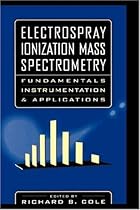
Electrospray Ionization Mass Spectrometry

Electrospray Ionization Mass Spectrometry

Electrospray Ionization Mass Spectrometry

From Wiley-Interscience

Comprehensive, up-to-date coverage of a revolutionary technique Electrospray ionization mass spectrometry (ESI-MS) has completely changed the way physicists, chemists, and biologists view the study of large molecules. The technique derives detailed information about molecular weights and structures from extremely small sample quantities. ESI-MS can create highly charged forms of very high molecular weight compounds, it is naturally compatible with many types of separation techniques, and it allows noncovalent interactions between molecules in solution to be preserved in the gas phase. But many researchers may not use the technique to its full potential because they are unfamiliar with the different perspectives of its underlying processes, the varied approaches to implementation, and the wide-ranging utility of the technique.

In this book, Richard B. Cole and an assemblage of leading researchers present a single-volume compilation of different approaches to the understanding and exploitation of ESI-MS. This comprehensive guide:

* Examines the physical and chemical aspects of the electrospray process and describes the events involved in ion formation as well as the electro-chemical phenomena that are central to charged droplet formation during the process

* Explores the coupling of electrospray ionization to various mass spectrometers, including quadrupole, magnetic, time-of-flight, quadrupole ion trap, and Fourier transform ion cyclotron resonance instruments

* Describes recent progress in interfacing ESI with solution-based separation techniques, including liquid chromatography and capillary electrophoresis

* Charts the rapid development of ESI applications and categorizes them by compound type: peptides and proteins, nucleic acids and their constituents, carbohydrates and lipids, small molecules related to pharmacology and drug metabolism, and organometallics and inorganic compounds


Electrospray Ionization Mass Spectrometry is the indispensable handbook and reference for anyone who wishes to understand, implement, or apply this technique, including researchers in chemistry, metallochemistry, biochemistry, biology, pharmacology, and physics.

More Mass Spectrometry Book Here.

Wednesday, June 4, 2008

Practical Aspects of Ion Trap Mass Spectrometry: Volume I: Fundamentals of Ion Trap Mass Spectrometry (Modern Mass Spectrometry)

Practical Aspects of Ion Trap Mass Spectrometry: Volume I: Fundamentals of Ion Trap Mass Spectrometry (Modern Mass Spectrometry)

Practical Aspects of Ion Trap Mass Spectrometry: Volume I: Fundamentals of Ion Trap Mass Spectrometry (Modern Mass Spectrometry)

From CRC-Press

Fundamentals of Ion Trap Mass Spectrometry presents an account of the development and theory of the quadrupole ion trap and its utilization as an ion storage device, a reactor for ion/molecular reactions, and a mass spectrometer. It also expands the appreciation of ion traps from that of a unique arrangement of electrodes of hyperbolic form (and having a pure quadrupole field) to a series of ion traps having fields with hexapole and octopole components and introduces the practical ion trapping device in which electrode spacing has been increased. The fundamentals of ion trap are covered in four chapters, beginning with the origin of the ion trap, its development and operating principles, and improvements in performance. The second part focuses on the environment within the ion trap -- the movement of ions within the trap -- and how this movement is modified by repeated collisions of the ions with buffer gas atoms of helium, and on the collisions of ions with molecules that lead to chemical change. The critical role of collisions in focusing the ion cloud for subsequent operations is emphasized. This important reference presents a coherent picture of the present status of research in the ion trapping field to facilitate the entree of potential ion trappers and provide a backdrop for ion trap research and development in the future.

See more at Mass Spectrometry Book aStore.

Tuesday, June 3, 2008

Inorganic Mass Spectrometry: Principles and Applications

Inorganic Mass Spectrometry: Principles and Applications

Inorganic Mass Spectrometry: Principles and Applications

By Sabine Becker

Providing an exhaustive review of this topic, Inorganic Mass Spectrometry: Principles and Applications provides details on all aspects of inorganic mass spectrometry, from a historical overview of the topic to the principles and functions of mass separation and ion detection systems. Offering a comprehensive treatment of inorganic mass spectrometry, topics covered include:

  • Recent developments in instrumentation

  • Developing analytical techniques for measurements of trace and ultratrace impurities in different materials

This broad textbook in inorganic mass spectrometry, presents the most important mass spectrometric techniques used in all fields of analytical chemistry. By covering recent developments and advances in all fields of inorganic mass spectrometry, this text provides researchers and students with information to answer any questions on this topic as well as providing the basic fundamentals for understanding this potentially complex, but increasingly relevant subject.

More at Chemistry Textbook aStore.

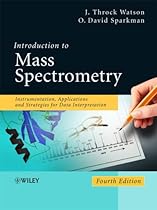
Introduction to Mass Spectrometry: Instrumentation, Applications, and Strategies for Data Interpretation

Introduction to Mass Spectrometry: Instrumentation, Applications, and Strategies for Data Interpretation

Introduction to Mass Spectrometry: Instrumentation, Applications, and Strategies for Data Interpretation

By J. Throck Watson, O. David Sparkman

Completely revised and updated, this text provides an easy-to-read guide to the concept of mass spectrometry and demonstrates its potential and limitations. Written by internationally recognised experts and utilising "real life" examples of analyses and applications, the book presents real cases of qualitative and quantitative applications of mass spectrometry. Unlike other mass spectrometry texts, this comprehensive reference provides systematic descriptions of the various types of mass analysers and ionisation, along with corresponding strategies for interpretation of data. The book concludes with a comprehensive 3000 references.

This multi-disciplined text covers the fundamentals as well as recent advance in this topic, providing need-to-know information for researchers in many disciplines including pharmaceutical, environmental and biomedical analysis who are utilizing mass spectrometry

Get Other Mass Spectrometry Book Here!

Wednesday, May 21, 2008

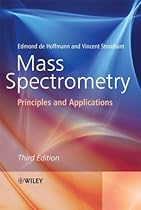
Mass Spectrometry: Principles and Applications

Mass Spectrometry: Principles and Applications

Mass Spectrometry: Principles and Applications

By Edmond de Hoffmann, Vincent Stroobant

The latest edition of a highly successful textbook, Mass Spectrometry, Third Edition provides students with a complete overview of the principles, theories and key applications of modern mass spectrometry. All instrumental aspects of mass spectrometry are clearly and concisely described: sources, analysers and detectors. Tandem mass spectrometry is introduced early on and then developed in more detail in a later chapter. Emphasis is placed throughout the text on optimal utilisation conditions. Various fragmentation patterns are described together with analytical information that derives from the mass spectra.

This new edition has been thoroughly revised and updated and has been redesigned to give the book a more contemporary look. As with previous editions it contains numerous examples, references and a series of exercises of increasing difficulty to encourage student understanding. Updates include: Increased coverage of MALDI and ESI, more detailed description of time of flight spectrometers, new material on isotope ratio mass spectrometry, and an expanded range of applications.

Mass Spectrometry, Third Edition is an invaluable resource for all undergraduate and postgraduate students using this technique in departments of chemistry, biochemistry, medicine, pharmacology, agriculture, material science and food science. It is also of interest for researchers looking for an overview of the latest techniques and developments.

Find more Mass Spectrometry at Spectroscopy Book aStore.