Showing posts with label Chromatography Book. Show all posts

Thursday, May 29, 2008

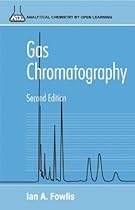
Gas Chromatography: Analytical Chemistry by Open Learning

Gas Chromatography: Analytical Chemistry by Open Learning

Gas Chromatography: Analytical Chemistry by Open Learning

By Ian A. Fowlis

Approaches the subject from the perspective of a chromatographer who needs to know enough theory to make the best use of a chosen technique. Emphasizes the actual application of the methods--not just the theories on which they are based. This edition features a number of advances in the field since publication of the first volume. These include new chapters on high resolution gas chromatography (GC), GC detectors and classification of GC. Self-assessment questions ensure full understanding of the concepts.

More at Chemistry Textbook aStore.

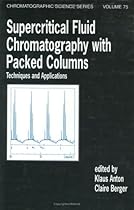
Supercritical Fluid Chromatography with Packed Columns (Chromatographic Science)

Supercritical Fluid Chromatography with Packed Columns (Chromatographic Science)

Supercritical Fluid Chromatography with Packed Columns (Chromatographic Science)

From CRC

From the analytical to industrial preparative scale, this work provides a praxis-oriented overview of packed column supercritical fluid chromatography. It discusses and evaluates established applications and techniques, up-to-date and promising developments, and commercial instrumentation devices for use in industry. The book also reveals possibilities for problem solving and future innovations.

See Gas Chromatography (GC) Book at Chemistry Textbook aStore.

Wednesday, May 28, 2008

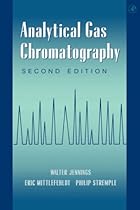
Analytical Gas Chromatography, Second Edition

The Troubleshooting and Maintenance Guide for Gas Chromatographers

Analytical Gas Chromatography, Second Edition

By Walter Jennings, Eric Mittlefehldt, Phillip Stremple

Gas chromatography remains the world's most widely used analytical technique, yet the expertise of a large proportion of chromatographers lies in other fields. Many users have little real knowledge of the variablesin the chromatographic process, the interaction between those variables, how they are best controlled, how the quality of their analytical results could be improved, and how analysis times can be shortened to facilitate the generation of a greater numberof more reliable results on the same equipment. An analyst with a more comprehensive understanding of chromatographic principles and practice, however, can often improve the quality of the data generated, reduce the analytical time, and forestall the needto purchase an additional chromatograph or another mass spectrometer.The Second Edition of Analytical Gas Chromatography is extensively revised with selected areas expanded and many new explanations and figures. The section on sample injection has been updated to include newer concepts of split, splitless, hot and cold on-column, programmed temperature vaporization, and large volume injections. Coverage of stationary phases now includes discussion, applications, and rationale of the increased thermal and oxidative resistance of the newly designed silarylenepolysiloxane polymers. Conventional and"extended range"polyethylene glycol stationary phases are examined from the viewpoints of temperature range and retention index reliabilities, and the chapter on"Variables"has been completely rewritten. The ways in which carrier gas velocity influences chromatographic performance is considered in detail, and includes what may be the first rational explanation of the seemingly anomalous effects that temperature exercises on gas viscosity (and gas flow). The practical effects that these changes cause to the chromatography is examined in pressure-, flow-, and"EPC-"regulated systems."Column Selection, Installation, and Use"has been completely rewritten as well. The accuracy of theVan Deemter plots has been greatly enhanced; a new program corrects for the first time for the changes in gas density and diffusion that occur during the chromatographic process because of solute progression through the pressure drop of the column. A new section has also been added on meeting thespecial requirements of columns destined for mass spectral analysis. The chapter on"Special Applications"has been expanded to include considerations of"selectivity tuning,"of fast analysis, and the section of Applications has been thoroughly updated and expanded.


Key Features

* Incorporates nearly 60% new material

* Covers the newest concepts and materials for sample injection and stationary phases

* Presents detailed consideration of the influence of carrier gas velocity on practical aspects of chromatographic performance

* Contains a chapter on "Special Analytical Techniques" which includes consideration of selectivity tuning and fast analysis

* Provides a new section addressing the special requirements of columns to be used in mass spectral analysis

* Includes an improved program that greatly enhances the accuracy of the Van Deemter plots by more accurately depicting localized chromatographic conditions at each point in the column

See Gas Chromatography (GC) BookaStore.

The Troubleshooting and Maintenance Guide for Gas Chromatographers

The Troubleshooting and Maintenance Guide for Gas Chromatographers

The Troubleshooting and Maintenance Guide for Gas Chromatographers

By Dean Rood

This fourth edition of the classic guide for every user of gas chromatographic instrumentation is now updated to include such new topics as fast GC using narrow, short columns, electronic pressure control, and basic aspects of quantitative gas chromatography.

The author shares his many years of experience in technical support for gas chromatography users, addressing the most common problems, questions and misconceptions in capillary gas chromatography. He structures and presents the material in a concise and practical manner, suitable even for the most inexperienced user without any detailed knowledge of chemistry or chromatography.

For lab technicians in chemistry, analytical, food, medicinal and environmental chemists, pharmaceutists.


Find more at Chemistry Textbook aStore.

Saturday, May 17, 2008

HPLC for Pharmaceutical Scientists

HPLC for Pharmaceutical Scientists

HPLC for Pharmaceutical Scientists

By Yuri V. Kazakevich, Rosario LoBrutto

HPLC for Pharmaceutical Scientists is an excellent book for both novice and experienced pharmaceutical chemists who regularly use HPLC as an analytical tool to solve challenging problems in the pharmaceutical industry. It provides a unified approach to HPLC with an equal and balanced treatment of the theory and practice of HPLC in the pharmaceutical industry.

In-depth discussion of retention processes, modern HPLC separation theory, properties of stationary phases and columns are well blended with the practical aspects of fast and effective method development and method validation. Practical and pragmatic approaches and actual examples of effective development of selective and rugged HPLC methods from a physico-chemical point of view are provided.

This book elucidates the role of HPLC throughout the entire drug development process from drug candidate inception to marketed drug product and gives detailed specifics of HPLC application in each stage of drug development.

The latest advancements and trends in hyphenated and specialized HPLC techniques (LC-MS, LC-NMR, Preparative HPLC, High temperature HPLC, high pressure liquid chromatography) are also discussed.

Find a HPLC Book or Chromatography Book Here!
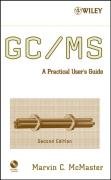
GC/MS: A Practical User's Guide

GC/MS: A Practical User's Guide

GC/MS: A Practical User's Guide

By Marvin McMaster

GC/MS: A Practical User's Guide , Second Edition teaches readers the practical applications of gas chromatography-mass spectrometry in compound identification and analysis of trace impurities. The book discusses empirical methods for optimizing chromatography, maintaining the instrumentation, and using mass spectral libraries for compound identification. This Second Edition includes information on recent advances in miniaturized and field-portable GC/MS systems and the use of microfluidic components.

Find a GC Book or Chromatography Book Here!

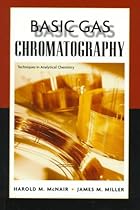
Basic Gas Chromatography

Basic Gas Chromatography

Basic Gas Chromatography

By Harold M. McNair, James M. Miller

Gas Chromatography (GC) is undoubtedly the most widely used technique for the separation and analysis of volatile compounds. Yet comprehensive guides to contemporary GC theory and practice are surprisingly hard to find.

Basic Gas Chromatography fills this significant void in the GC literature. Written by two well-known practitioners and educators in GC, it offers thorough coverage of the basic principles and techniques of modern gas chromatography.

Designed to serve as a primer/working reference for bench chemists and as a textbook for upper-level undergraduate and graduate students, it presents the fundamentals in a straightforward and logical fashion. Theoretical issues are explained without complicated equations and derivations and always in terms of how they relate to practical operating principles. Timely, comprehensive, and accessible, Basic Gas Chromatography:

* Provides a balanced presentation of theory and practice

* Includes both capillary column and packed column chromatography

* Uses the new IUPAC terms throughout, cross-referenced to traditional terms and symbols

* Offers a wealth of helpful hints, step-by-step guidelines, and trouble-shooting tips

* Briefly covers GC-MS, headspace analysis, chiral analysis, solid phase microextraction, and other cutting-edge topics.

Find a GC Book or Chromatography Book Here!

Wednesday, May 14, 2008

Modern HPLC for Practicing Scientists

Modern HPLC for Practicing Scientists

Modern HPLC for Practicing Scientists

By Michael W. Dong

A comprehesive yet concise guide to Modern HPLC

Written for practitioners by a practitioner, Modern HPLC for Practicing Scientists is a concise text which presents the most important High-Performance Liquid Chromatography (HPLC) fundamentals, applications, and developments. It describes basic theory and terminology for the novice, and reviews relevant concepts, best practices, and modern trends for the experienced practitioner. Moreover, the book serves well as an updated reference guide for busy laboratory analysts and researchers.

Topics covered include:

  • HPLC operation

  • Method development

  • Maintenance and troubleshooting

  • Modern trends in HPLC such as quick-turnaround and "greener" methods

  • Regulatory aspects

While broad in scope, this book focuses particularly on reversed-phase HPLC, the most common separation mode, and on applications for the pharmaceutical industry, the largest user segment. Accessible to both novice and intermedate HPLC users, information is delivered in a straightforward manner illustrated with an abundance of diagrams, chromatograms, tables, and case studies, and supported with selected key references and Web resources.

With intuitive explanations and clear figures, Modern HPLC for Practicing Scientists is an essential resource for practitioners of all levels who need to understand and utilize this versatile analytical technology.

See More HPLC Book or Chromatography Book Here!

Practical HPLC Method Development, 2nd Edition

Practical HPLC Method Development, 2nd Edition

Practical HPLC Method Development, 2nd Edition

By Lloyd R. Snyder, Joseph J. Kirkland, Joseph L. Glajch

This revision brings the reader completely up to date on the evolving methods associated with increasingly more complex sample types analyzed using high-performance liquid chromatography, or HPLC. The book also incorporates updated discussions of many of the fundamental components of HPLC systems and practical issues associated with the use of this analytical method. This edition includes new or expanded treatments of sample preparation, computer assisted method development, as well as biochemical samples, and chiral separations.

Book Info

Provides comprehensive coverage of all of the essential steps of method development: sample pretreatment, detection of sample bands, choosing separation conditions, quantification, and method of validation and transfer. DLC: High performance liquid chromatography - Methodology.

Card catalog description

Thoroughly revised and greatly expanded, the Second Edition of this landmark work brings scientists completely up to date on method development for HPLC, one of the main analytical techniques in use today. The authors, widely recognized as preeminent authorities in the field, offer the most far-reaching treatment available, taking into account advances in chromatography and the increasingly complex sample types that have become significant in the past decade.

The publisher, John Wiley & Sons

This revision brings the reader completely up to date on the evolving methods associated with increasingly more complex sample types analyzed using high-performance liquid chromatography, or HPLC. The book also incorporates updated discussions of many of the fundamental components of HPLC systems and practical issues associated with the use of this analytical method. This edition includes new or expanded treatments of sample preparation, computer assisted method development, as well as biochemical samples, and chiral separations.

See More HPLC Book or Chromatography Book Here!