Showing posts with label Inorganic Book. Show all posts

Friday, June 6, 2008

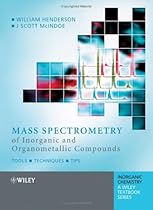
Mass Spectrometry of Inorganic and Organometallic Compounds: Tools Techniques Tips (Inorganic Chemistry: A Textbook Series)

Mass Spectrometry of Inorganic and Organometallic Compounds: Tools  Techniques  Tips (Inorganic Chemistry: A Textbook Series)

Mass Spectrometry of Inorganic and Organometallic Compounds: Tools Techniques Tips (Inorganic Chemistry: A Textbook Series)

By William Henderson, J. Scott McIndoe

This is the first modern book to treat inorganic and organometallic mass spectrometry simultaneously. It is textbook and handbook in one; as a textbook it introduces the techniques and gives hints on how to apply the various techniques, as a handbook it lists all available ionization techniques for just about any given compound. The book also includes non-mathematical explanations of how modern MS instruments work

Mass Spectrometry of Inorganic and Organometallic Compounds will inspire the synthetic inorganic and organometallic chemist with the confidence to apply some of the new techniques to their characterization problems.

Get other Mass Spectrometry Book Here.

Tuesday, June 3, 2008

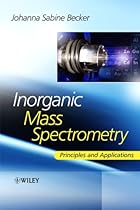
Inorganic Mass Spectrometry: Principles and Applications

Inorganic Mass Spectrometry: Principles and Applications

Inorganic Mass Spectrometry: Principles and Applications

By Sabine Becker

Providing an exhaustive review of this topic, Inorganic Mass Spectrometry: Principles and Applications provides details on all aspects of inorganic mass spectrometry, from a historical overview of the topic to the principles and functions of mass separation and ion detection systems. Offering a comprehensive treatment of inorganic mass spectrometry, topics covered include:

  • Recent developments in instrumentation

  • Developing analytical techniques for measurements of trace and ultratrace impurities in different materials

This broad textbook in inorganic mass spectrometry, presents the most important mass spectrometric techniques used in all fields of analytical chemistry. By covering recent developments and advances in all fields of inorganic mass spectrometry, this text provides researchers and students with information to answer any questions on this topic as well as providing the basic fundamentals for understanding this potentially complex, but increasingly relevant subject.

More at Chemistry Textbook aStore.

Tuesday, May 20, 2008

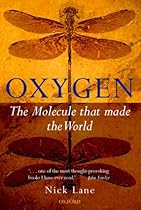
Oxygen: The Molecule that Made the World

Oxygen: The Molecule that Made the World

Oxygen: The Molecule that Made the World

By Nick Lane

Three hundred million years ago, dragonflies grew as big as seagulls, with wingspans nearly a yard across. Researchers claim they could have flown only if the air had contained more oxygen than today-probably as much as 35 per cent. But oxygen is a toxic gas. Fruit flies raised at twice the

normal level of oxygen live half as long as their siblings. If atmospheric oxygen reached 35 per cent in the Carboniferous, why did oxygen promote exuberant growth, instead of rapid aging and death?

This is just one of the puzzles Nick Lane answers in Oxygen. Lane takes the reader on an enthralling journey, as gripping as a thriller, as he unravels the unexpected ways in which oxygen spurred the evolution of life and death. The book explains far more than the size of ancient insects: it

shows how oxygen underpins the origin of biological complexity, the birth of photosynthesis, the sudden evolution of animals, the need for two sexes, the accelerated aging of cloned animals like Dolly the sheep, and the surprisingly long lives of bats and birds. Drawing on this grand evolutionary

canvas, Oxygen offers fresh perspectives on our own lives and deaths, explaining modern killer diseases, why we age, and what we can do about it.

Advancing revelatory new ideas, following chains of evidence, the book ranges through many disciplines, from environmental sciences to molecular medicine. The result is a captivating vision of contemporary science and a humane synthesis of our place in nature. This remarkable book will

redefine the way we think about the world.

Find more Inoganic Book at Chemistry Textbook aStore.

Monday, May 19, 2008

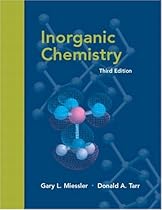
Inorganic Chemistry (3rd Edition)

Inorganic Chemistry (3rd Edition)

Inorganic Chemistry (3rd Edition)

By Gary L. Miessler

This highly readable book provides the essentials of Inorganic Chemistry with molecular symmetry as its foundation. Chapter topics include atomic structure, molecular orbitals, organometallic chemistry, simple bonding theory, symmetry and group theory, and more. For chemists and other professionals who want to update or improve their background in the field.

The publisher, Prentice-Hall Engineering/Science/Mathematics

This introduction to inorganic chemistry emphasizes the use of bonding theories to explain the structures and reactions of inorganic compounds.

This highly readable book provides the essentials of Inorganic Chemistry with molecular symmetry as its foundation. Chapter topics include atomic structure, molecular orbitals, organometallic chemistry, simple bonding theory, symmetry and group theory, and more. For chemists and other professionals who want to update or improve their background in the field.

Find more Inoganic Book Here!

Sunday, May 18, 2008

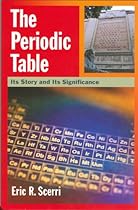
The Periodic Table: Its Story and Its Significance

The Periodic Table: Its Story and Its Significance

The Periodic Table: Its Story and Its Significance

By Eric R. Scerri

The periodic table is one of the most potent icons in science. It lies at the core of chemistry and embodies the most fundamental principles of the field. The one definitive text on the development of the periodic table by van Spronsen (1969), has been out of print for a considerable time.

The present book provides a successor to van Spronsen, but goes further in giving an evaluation of the extent to which modern physics has, or has not, explained the periodic system. The book is written in a lively style to appeal to experts and interested lay-persons alike.

The Periodic Table begins with an overview of the importance of the periodic table and of the elements and it examines the manner in which the term 'element' has been interpreted by chemists and philosophers. The book then turns to a systematic account of the early developments that led to the

classification of the elements including the work of Lavoisier, Boyle and Dalton and Cannizzaro. The precursors to the periodic system, like Dobereiner and Gmelin, are discussed. In chapter 3 the discovery of the periodic system by six independent scientists is examined in detail.

Two chapters are devoted to the discoveries of Mendeleev, the leading discoverer, including his predictions of new elements and his accommodation of already existing elements. Chapters 6 and 7 consider the impact of physics including the discoveries of radioactivity and isotopy and successive

theories of the electron including Bohr's quantum theoretical approach. Chapter 8 discusses the response to the new physical theories by chemists such as Lewis and Bury who were able to draw on detailed chemical knowledge to correct some of the early electronic configurations published by Bohr and others.

Chapter 9 provides a critical analysis of the extent to which modern quantum mechanics is, or is not, able to explain the periodic system from first principles. Finally, chapter 10 considers the way that the elements evolved following the Big Bang and in the interior of stars. The book closes with

an examination of further chemical aspects including lesser known trends within the periodic system such as the knight's move relationship and secondary periodicity, as well at attempts to explain such trends.

Find more Inoganic Book Here!