Saturday, May 17, 2008

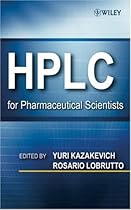
HPLC for Pharmaceutical Scientists

HPLC for Pharmaceutical Scientists

HPLC for Pharmaceutical Scientists

By Yuri V. Kazakevich, Rosario LoBrutto

HPLC for Pharmaceutical Scientists is an excellent book for both novice and experienced pharmaceutical chemists who regularly use HPLC as an analytical tool to solve challenging problems in the pharmaceutical industry. It provides a unified approach to HPLC with an equal and balanced treatment of the theory and practice of HPLC in the pharmaceutical industry.

In-depth discussion of retention processes, modern HPLC separation theory, properties of stationary phases and columns are well blended with the practical aspects of fast and effective method development and method validation. Practical and pragmatic approaches and actual examples of effective development of selective and rugged HPLC methods from a physico-chemical point of view are provided.

This book elucidates the role of HPLC throughout the entire drug development process from drug candidate inception to marketed drug product and gives detailed specifics of HPLC application in each stage of drug development.

The latest advancements and trends in hyphenated and specialized HPLC techniques (LC-MS, LC-NMR, Preparative HPLC, High temperature HPLC, high pressure liquid chromatography) are also discussed.

Find a HPLC Book or Chromatography Book Here!

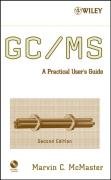
GC/MS: A Practical User's Guide

GC/MS: A Practical User's Guide

GC/MS: A Practical User's Guide

By Marvin McMaster

GC/MS: A Practical User's Guide , Second Edition teaches readers the practical applications of gas chromatography-mass spectrometry in compound identification and analysis of trace impurities. The book discusses empirical methods for optimizing chromatography, maintaining the instrumentation, and using mass spectral libraries for compound identification. This Second Edition includes information on recent advances in miniaturized and field-portable GC/MS systems and the use of microfluidic components.

Find a GC Book or Chromatography Book Here!

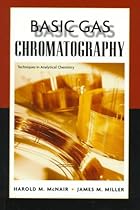
Basic Gas Chromatography

Basic Gas Chromatography

Basic Gas Chromatography

By Harold M. McNair, James M. Miller

Gas Chromatography (GC) is undoubtedly the most widely used technique for the separation and analysis of volatile compounds. Yet comprehensive guides to contemporary GC theory and practice are surprisingly hard to find.

Basic Gas Chromatography fills this significant void in the GC literature. Written by two well-known practitioners and educators in GC, it offers thorough coverage of the basic principles and techniques of modern gas chromatography.

Designed to serve as a primer/working reference for bench chemists and as a textbook for upper-level undergraduate and graduate students, it presents the fundamentals in a straightforward and logical fashion. Theoretical issues are explained without complicated equations and derivations and always in terms of how they relate to practical operating principles. Timely, comprehensive, and accessible, Basic Gas Chromatography:

* Provides a balanced presentation of theory and practice

* Includes both capillary column and packed column chromatography

* Uses the new IUPAC terms throughout, cross-referenced to traditional terms and symbols

* Offers a wealth of helpful hints, step-by-step guidelines, and trouble-shooting tips

* Briefly covers GC-MS, headspace analysis, chiral analysis, solid phase microextraction, and other cutting-edge topics.

Find a GC Book or Chromatography Book Here!

Wednesday, May 14, 2008

Modern HPLC for Practicing Scientists

Modern HPLC for Practicing Scientists

Modern HPLC for Practicing Scientists

By Michael W. Dong

A comprehesive yet concise guide to Modern HPLC

Written for practitioners by a practitioner, Modern HPLC for Practicing Scientists is a concise text which presents the most important High-Performance Liquid Chromatography (HPLC) fundamentals, applications, and developments. It describes basic theory and terminology for the novice, and reviews relevant concepts, best practices, and modern trends for the experienced practitioner. Moreover, the book serves well as an updated reference guide for busy laboratory analysts and researchers.

Topics covered include:

  • HPLC operation

  • Method development

  • Maintenance and troubleshooting

  • Modern trends in HPLC such as quick-turnaround and "greener" methods

  • Regulatory aspects

While broad in scope, this book focuses particularly on reversed-phase HPLC, the most common separation mode, and on applications for the pharmaceutical industry, the largest user segment. Accessible to both novice and intermedate HPLC users, information is delivered in a straightforward manner illustrated with an abundance of diagrams, chromatograms, tables, and case studies, and supported with selected key references and Web resources.

With intuitive explanations and clear figures, Modern HPLC for Practicing Scientists is an essential resource for practitioners of all levels who need to understand and utilize this versatile analytical technology.

See More HPLC Book or Chromatography Book Here!
Practical HPLC Method Development, 2nd Edition

Practical HPLC Method Development, 2nd Edition

Practical HPLC Method Development, 2nd Edition

By Lloyd R. Snyder, Joseph J. Kirkland, Joseph L. Glajch

This revision brings the reader completely up to date on the evolving methods associated with increasingly more complex sample types analyzed using high-performance liquid chromatography, or HPLC. The book also incorporates updated discussions of many of the fundamental components of HPLC systems and practical issues associated with the use of this analytical method. This edition includes new or expanded treatments of sample preparation, computer assisted method development, as well as biochemical samples, and chiral separations.

Book Info

Provides comprehensive coverage of all of the essential steps of method development: sample pretreatment, detection of sample bands, choosing separation conditions, quantification, and method of validation and transfer. DLC: High performance liquid chromatography - Methodology.

Card catalog description

Thoroughly revised and greatly expanded, the Second Edition of this landmark work brings scientists completely up to date on method development for HPLC, one of the main analytical techniques in use today. The authors, widely recognized as preeminent authorities in the field, offer the most far-reaching treatment available, taking into account advances in chromatography and the increasingly complex sample types that have become significant in the past decade.

The publisher, John Wiley & Sons

This revision brings the reader completely up to date on the evolving methods associated with increasingly more complex sample types analyzed using high-performance liquid chromatography, or HPLC. The book also incorporates updated discussions of many of the fundamental components of HPLC systems and practical issues associated with the use of this analytical method. This edition includes new or expanded treatments of sample preparation, computer assisted method development, as well as biochemical samples, and chiral separations.

See More HPLC Book or Chromatography Book Here!
Tuesday, May 13, 2008

The Green Book: The Everyday Guide to Saving the Planet One Simple Step at a Time

The Green Book: The Everyday Guide to Saving the Planet One Simple Step at a Time

The Green Book: The Everyday Guide to Saving the Planet One Simple Step at a Time

By Elizabeth Rogers, Thomas M. Kostigen

Ellen DeGeneres, Robert Redford, Will Ferrell, Jennifer Aniston, Faith Hill, Tim McGraw, Martha Stewart, Tyra Banks, Dale Earnhardt, Jr., Tiki Barber, Owen Wilson, and Justin Timberlake tell you how they make a difference to the environment.

Inside The Green Book, find out how you can too:

- Don’t ask for ATM receipts. If everyone in the United States refused their receipts, it would save a roll of paper more than two billion feet long, or enough to circle the equator fifteen times!

- Turn off the tap while you brush your teeth. You’ll conserve up to five gallons of water per day. Throughout the entire United States, the daily savings could add up to more water than is consumed every day in all of New York City.

- Get a voice-mail service for your home phone. If all answering machines in U.S. homes were replaced by voice-mail services, the annual energy savings would total nearly two billion kilowatt hours. The resulting reduction in air pollution would be equivalent to removing 250,000 cars from the road for a year!

With wit and authority, authors Elizabeth Rogers and Thomas Kostigen provide hundreds of solutions for all areas of your life, pinpointing the smallest changes that have the biggest impact on the health of our precious planet.

See More at Chemistry Textbook aStore.

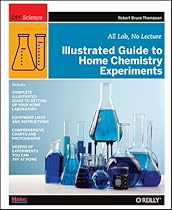
Illustrated Guide to Home Chemistry Experiments: All Lab, No Lecture (Illustrated Guide)

Illustrated Guide to Home Chemistry Experiments: All Lab, No Lecture (Illustrated Guide)

Illustrated Guide to Home Chemistry Experiments: All Lab, No Lecture (Illustrated Guide)

By Robert Thompson

For students, DIY hobbyists, and science buffs, who can no longer get real chemistry sets, this one-of-a-kind guide explains how to set up and use a home chemistry lab, with step-by-step instructions for conducting experiments in basic chemistry -- not just to make pretty colors and stinky smells, but to learn how to do real lab work:

  • Purify alcohol by distillation

  • Produce hydrogen and oxygen gas by electrolysis

  • Smelt metallic copper from copper ore you make yourself

  • Analyze the makeup of seawater, bone, and other common substances

  • Synthesize oil of wintergreen from aspirin and rayon fiber from paper

  • Perform forensics tests for fingerprints, blood, drugs, and poisons

  • and much more


From the 1930s through the 1970s, chemistry sets were among the most popular Christmas gifts, selling in the millions. But two decades ago, real chemistry sets began to disappear as manufacturers and retailers became concerned about liability. ,em>The Illustrated Guide to Home Chemistry Experiments steps up to the plate with lessons on how to equip your home chemistry lab, master laboratory skills, and work safely in your lab. The bulk of this book consists of 17 hands-on chapters that include multiple laboratory sessions on the following topics:

  • Separating Mixtures

  • Solubility and Solutions

  • Colligative Properties of Solutions

  • Introduction to Chemical Reactions & Stoichiometry

  • Reduction-Oxidation (Redox) Reactions

  • Acid-Base Chemistry

  • Chemical Kinetics

  • Chemical Equilibrium and Le Chatelier's Principle

  • Gas Chemistry

  • Thermochemistry and Calorimetry

  • Electrochemistry

  • Photochemistry

  • Colloids and Suspensions

  • Qualitative Analysis

  • Quantitative Analysis

  • Synthesis of Useful Compounds

  • Forensic Chemistry


With plenty of full-color illustrations and photos, Illustrated Guide to Home Chemistry Experiments offers introductory level sessions suitable for a middle school or first-year high school chemistry laboratory course, and more advanced sessions suitable for students who intend to take the College Board Advanced Placement (AP) Chemistry exam. A student who completes all of the laboratories in this book will have done the equivalent of two full years of high school chemistry lab work or a first-year college general chemistry laboratory course.

This hands-on introduction to real chemistry -- using real equipment, real chemicals, and real quantitative experiments -- is ideal for the many thousands of young people and adults who want to experience the magic of chemistry.

See More at Chemistry Textbook aStore.